
Mortgage finance remains a structural growth opportunity in India with a policy focus on affordable housing, housing shortages, low mortgage penetration, and rising incomes as drivers. Affordable Housing Finance Companies (AHFCs) serve the mass market, low-income segments, which is the least-serviced category, and to operate in this segment, the mortgage provider needs good assessment skills. AHFCs and HFCs have also been increasing exposure in other mortgage segments (loan against property, developer loans among others).

India's fiscal deficit reached 4.11 trillion rupees ($61.67 billion) during April-October or 74 per cent of the full-year target, government data showed on Monday.

The Railway ministry has been allocated budgetary support of Rs 140367.13 crore in the Union Budget on Tuesday - Rs 20,311 crore more than the revised figures of the previous fiscal. Overall, the national transporter is set to get a capital expenditure (CapEx) push of Rs 2.45 lakh crore in the financial year 2022-23, 14 per cent higher than the budgeted capital expenditure of Rs 2.15 lakh crore for the current financial year. Finance Minister Nirmala Sitharaman in her Budget speech for 2022-23 said that India will manufacture 400 new, energy-efficient Vande Bharat trains in the next three years.

The Kumbh Mela is what it is because of the devotion of millions who make it an experience like no other. It is experiencing the heart and soul of India and the brotherhood of mankind.

The Reserve Bank of India on Thursday kept the benchmark interest rate unchanged at 4 per cent and decided to continue with its accommodative stance against the backdrop of an elevated level of inflation.

The government has revised gold import data, bringing down numbers for November by $5 billion to $9.84 billion, possibly to rectify double accounting of inbound shipments. According to revised data of the commerce ministry arm Directorate General of Commercial Intelligence and Statistics (DGCIS), gold import numbers have been slashed since April 2024, revealing excess imports of about $11.7 billion during the first eight months of 2024-25.

The Centre could better its fiscal deficit at 6.6 per cent of GDP in this financial year on stronger-than-expected revenue buoyancy, even if the budgeted disinvestment target is not met, Fitch Ratings has said. The international rating agency had last week kept the sovereign rating unchanged at 'BBB-' with a negative outlook, and said that the risks to India's medium-term growth outlook are narrowing with rapid economic recovery from the pandemic and easing financial sector pressures. In an email interview with PTI, Fitch Ratings Director (Asia-Pacific Sovereigns) Jeremy Zook said the two key positive triggers that could lead to a revision of the outlook to stable are implementation of a credible medium-term fiscal strategy to lower debt burden and higher medium-term investment and growth rates without the creation of macroeconomic imbalances, such as from successful structural reform implementation and a healthier financial sector.

Given the high priority accorded to the manufacturing sector, several policy initiatives around the theme of Atmanirbhar Bharat have been set in motion to address its competitiveness and growth. Some notable examples include the PLI scheme and the employment-linked incentive scheme announced in the recent Union Budget. The Budget also announced the setting up of 12 industrial parks under the National Industrial Corridor Development Programme (NICDP).

Nirmala Sitharaman's messaging was clear when she presented a well-balanced Budget with an eye on state elections in nine states followed by a general election next year, observes Ramesh Menon.

Under the 11th Five-Year Plan (2007-12), Rs 550 crore (Rs 5.5 billion) was provided for promoting exports through Market Access Initiative scheme.

Fiscal deficit for 2020-21 was at 9.3 per cent of the gross domestic product (GDP), lower than 9.5 per cent estimated by the finance ministry in the revised Budget estimates, according to the CGA data. Unveiling the revenue-expenditure data of the Union government for 2020-21, the Controller General of Accounts (CGA) on Monday said that the revenue deficit at the end of the fiscal was 7.42 per cent.

'More a show that you are doing something in the Budget even if that something never actually comes to pass,' notes Nitin Desai.

'...to address the serious faultlines that had got exposed during the pandemic.' 'If the economy is looking up this year, we could have been allocated an increase of at least 20%.'

Central Board of Direct Taxes officials claim the figure has surpassed indirect taxes for the first time.

'Inflation is not good for industry. Nor for the economy as a whole.'

The new TDP government will have to mop up over Rs 10,000 crore to fulfill the financial requirements for July, a retired senior bureaucrat said.
For 2017-18, the government aims to bring down the fiscal deficit to 3.2 per cent of GDP. Last fiscal, it had met the 3.5 per cent target.

'We have loved Braveheart, Lord of the Rings, Game of Thrones and Apocalypto.' 'The thought was 'When are we going to do such films?''

The Union government's fiscal deficit works out to be Rs 5.47 lakh crore or 36.3 per cent of the budget estimates at the end of October 2021 on the back of improvement in revenue collection, according to the data released by the Controller General of Accounts (CGA) on Tuesday. The deficit figures in the current fiscal appear better than the previous financial year when the gap between expenditure and revenue had soared to 119.7 per cent of the last year's Budget Estimates (BE) mainly on account of a jump in expenditure to deal with the COVID-19 pandemic. In absolute terms, the fiscal deficit was Rs 5,47,026 crore at the end of October, the CGA said.

India's gross tax collections soared to a record high of Rs 27.07 lakh crore in the fiscal year ended March 31, led by impressive growth in corporate tax and customs, taking the tax-to-GDP ratio to an over two-decade high of 11.7 per cent, Revenue Secretary Tarun Bajaj said on Friday.
The central government is likely to further consolidate its fiscal deficit by 50 basis points (bps) to 5.9 per cent in FY24 from 6.4 per cent in FY23, according to a recent report released by Goldman Sachs on Tuesday. In the current fiscal year, there is going to be an upside of 0.5 per cent on the receipts side due to higher nominal GDP growth, and higher tax buoyancy because of the formalisation, the report said. The upside to expenditure is mainly going to come from incremental subsidies (0.8 per cent of GDP), in both food and fertilizer, it said. The upcoming pre-election Budget will carry forward the trend of the increased capital expenditure seen in recent years.

Currently, there is no Hindu temple in Narowal district, forcing the Hindu community to perform their religious rituals at home or travel to temples in Sialkot and Lahore.

Equity benchmarks climbed in early trade on Wednesday amid an overall positive trend in the global markets and ahead of the presentation of Union Budget 2023-24. The 30-share BSE benchmark Sensex jumped 516.97 points to 60,066.87. The broader NSE Nifty climbed 153.15 points to 17,815.30.

The central government's fiscal deficit touched 21.2 per cent of the annual target in the June quarter as against 18.2 per cent in the year-ago period, according to official data. The fiscal deficit is the difference between total expenditure and revenue of the government. It indicates the total borrowing that are needed by the government.

The Centre has allocated Rs 73,000 crore for the rural jobs guarantee programme for 2022-23.

The Budget allocation for Ministry of Agriculture and allied activities has grown by 114% since 2010-11

'The Budget needs to focus more on social welfare schemes.'

The net indirect tax collection in 2020-21 grew 12.3 per cent annually to Rs 10.71 lakh crore, thereby exceeding the target set in revised estimates, the Finance Ministry said on Tuesday. The mop-up through indirect taxes, which include GST, Customs and excise duties, was Rs 9.54 lakh crore in 2019-20. In the Revised Estimates (RE) for 2020-21, the target was set at Rs 9.89 lakh crore. Net collections from Goods and Services Tax (GST) stood at Rs 5.48 lakh crore during 2020-21, an eight per cent drop compared to Rs 5.99 lakh crore in the previous fiscal year.
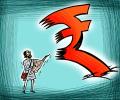
For first time in 8 yrs, stake sale proceeds could exceed Budget Estimates. ONGC's acquisition of HPCL alone could get the exchequer more than Rs 30,000 crore.
The Budget estimate of 2009-10 includes a sum of Rs 35,000 crore as expected revenue from auction of 3G spectrum, finance minister Pranab Mukherjee said in Budget papers.

Chief Economic Advisor V Anantha Nageswaran on Thursday said the economy is expected to grow at 6.5 per cent in the current fiscal notwithstanding deficient rains in August. India recorded economic growth of 7.8 per cent in the April-June quarter of 2023-24 against 13.1 per cent in the year-ago period. India's economy in Q1 grew at the fastest pace in a year, on the shoulders of a boost in capital expenditure both at central and state levels, along with stronger consumption demand, especially in rural areas, and improved performance in the services sector, he said.

For 2017-18, the government aims to bring down the fiscal deficit to 3.2 per cent of the GDP. Last fiscal, it had met the 3.5 per cent target.

Manoj Bajpayee's 100th film earned Rs 6 million in its first weekend.

The government has budgeted to cut the fiscal deficit to 3.3 per cent of GDP or Rs 6.24 lakh crore in 2018-19, from 3.53 per cent in the previous financial year.

In a big push to the production-linked incentive (PLI) scheme, the government has nearly doubled (increase of 81 per cent) the allocation in five key industry segments from Rs 8,405 crore in the Revised Estimate of FY24 to Rs 15,198 crore in the Interim Budget for FY25. The segments cover over eight PLI schemes, including mobile phones, IT hardware, pharma (PLIs for medical devices, intermediates and pharmaceuticals), food processing, telecom hardware and, auto and auto components. In FY24, DPIIT officials, however, said that the disbursements would be much higher at around Rs 11,000 crore than what has been budgeted for the year.

Supplementary provisions exceeded the original provision by as much as 239,900 per cent in 2014-15.

Most families had high value currency notes and they used it for making payments during the pre-demonetisation era.

The Nifty and Sensex traded close to their respective all-time highs.
The Budget estimate for the fiscal deficit in the year 2009-10 is Rs 3,32,835 crore (Rs 3,328.35 billion). Last year 2008-09, the first two months of the fiscal had accounted for 54.9 per cent of the year's Budget estimate.
 © 2026 Rediff.com - Advertise with us - Disclaimer - Privacy Policy - Sitemap - Feedback - About us - Terms of use - Grievances